
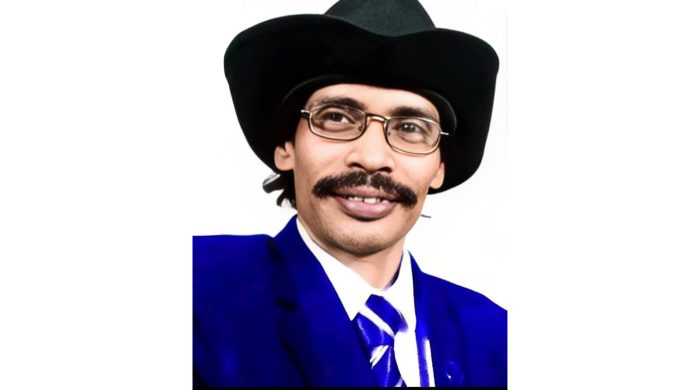
Notoraj N A Polash’s “Bangarashayan Rasa Theory” Not a Rejection of the Nine Rasas, but an Exploration of Jatra’s Invisible Spectrum of Aesthetic Experience Notoraj N A Polash For a long time, one question has deeply occupied my thoughts: Can the aesthetic experience of Jatra be fully explained within the framework of the classical Indian theory of the nine Rasas (Navarasa)? There is no doubt that Navarasa represents one of the most powerful and historically significant systems of Indian aesthetics. Shringara, Hasya, Karuna, Raudra, Vira, Bhayanaka, Bibhatsa, Adbhuta and Shanta encompass a vast field of human emotions and aesthetic experiences. However, when we attempt to analyse certain distinctive aesthetic experiences found in the long folk tradition of Bengali Jatra—such as relationships, social life, collective experience, sacrifice, patriotism, popular consciousness and self-awakening—a broader analytical framework may become necessary. It is from this sustained observation, study and reflection on Jatra texts, performance practices, songs, dialogue, music, folk life and audience experience that a proposed aesthetic model has emerged: “Bangarashayan Rasa Theory.” This theory is not an opposition to Navarasa. Rather, its fundamental proposition is:
“Not a rejection of the nine Rasas, but an exploration of Jatra’s invisible spectrum of aesthetic experience on the foundation of Navarasa.”
The Theoretical Significance of the Term “Bangarashayan” The term Bangarashayan may be conceptually understood through three components: Bangla + Rasa + Ayan Here, Bangla refers to the life, folk traditions, collective consciousness, language, culture and historical experiences of Bengal. Rasa refers to aesthetic experience. Ayan refers to a pathway of analysis, movement and realization. Thus, Bangarashayan may be defined as:
A proposed aesthetic methodology for analysing the origin, movement, transformation and audience experience of aesthetic sensations expressed through the life of Bengal and the art of Jatra.
A Proposed New Definition of Rasa In Bangarashayan Rasa Theory, Rasa is not regarded merely as an emotion or feeling. Rather:
“Rasa is the distinctive aesthetic experience savoured within the consciousness of the audience through the integration of determinants, acting, speech, music, bodily expression, visual elements, movement and interpersonal relationships in an artistic performance.” In other words, Bhava and Rasa are not identical. Bhava is an essential constituent in the creation of Rasa. Rasa is the aesthetic transformation of Bhava and the resultant experience actually savoured by the audience. This distinction constitutes one of the fundamental premises of Bangarashayan Rasa Theory.
The Distinctiveness and Movement of the Rasas
The Nine Proposed Expanded Rasas 10. Bhakti Rasa Core: Reverence and surrender. Rasagati: Faith → Reverence → Attraction → Surrender → Spiritual experience
“To value another’s existence above one’s own.”
“I am not alone.”
“Rasagati”: A Fundamental Concept of Bangarashayan One of the most important proposed concepts of Bangarashayan Rasa Theory is Rasagati, or the movement of Rasa. Conventional Rasa analysis often asks:
“What is the emotion?” Bangarashayan proposes adding another question: “How does the Rasa emerge, how does it transform, and where does it reach its aesthetic culmination?” This movement is Rasagati. For example: Karuna: Loss → Pain → Tears → Empathy Raudra: Injustice → Resentment → Anger → Resistance Pratibad: Injustice → Awareness → Question → Protest → Desire for Change Chaitanya: Experience → Question → Inquiry → Realization → Awakening Therefore, every fundamental Rasa should possess its own distinctive trajectory or Rasagati.
The “Rasa Identity Test” Bangarashayan does not seek to recognise an emotion as an independent Rasa merely by giving it a separate name. Any proposed new Rasa should pass at least seven tests:
Could There Be a Nineteenth Rasa in the Future? Bangarashayan does not close the door to this possibility. Its position would simply be:
“Prove it.” If someone proposes a nineteenth Rasa in the future, that proposition should demonstrate: a distinct Sthayi Bhava; distinct Vibhava; distinct Anubhava; distinct Rasagati; distinct audience experience; fundamental differences from the existing eighteen Rasas; and a distinctive mode of expression within the language of Jatra. Thus, Bangarashayan is not intended to be a closed theory. It is proposed as a testable, revisable and research-oriented aesthetic framework. This openness may strengthen the theory by allowing future scholarship to challenge, refine or expand it.
Rasa and the Combination of Rasas The existence of eighteen Rasas does not mean that they are eighteen completely isolated emotional experiences. Rasas may interact, overlap and combine with one another. For example: Shringara + Viraha = Love intensified by separation Karuna + Tyaga = The sorrow of self-sacrifice Raudra + Pratibad = Social resistance Vira + Deshaprema = Struggle for the homeland Bhakti + Chaitanya = Spiritual awakening Lokaja + Hasya = Humour rooted in everyday life Therefore:
“The number of fundamental Rasas may be defined, but the possibilities of their interaction, combination and artistic expression are potentially infinite.”
The “Rasa Cycle” of Jatra The aesthetic experience of a complete Jatra performance may move from one Rasa to another. A possible trajectory may be represented as: Lokaja Life → Shringara → Viraha → Karuna → Raudra → Pratibad → Vira → Tyaga → Deshaprema → Bhakti → Shanta → Chaitanya This is not a compulsory formula. Rather, it is a proposed model of the possible movement of aesthetic experience within a Jatra narrative. Here lies one of the important propositions of Bangarashayan:
Jatra does not merely make the audience feel; it may also create the possibility of transforming the audience’s consciousness.
What Does “Completeness” in Jatra Mean? The proposal of eighteen Rasas does not mean that every Jatra pala must contain all eighteen. A particular Jatra pala may achieve aesthetic completeness when the Rasas appropriate to its narrative, characters, conflicts, environment and artistic purpose develop naturally, proportionately and effectively. Therefore:
One Pala ≠ A Mandatory Collection of Eighteen Rasas But: The overall Rasa Theory of Jatra = An Expanded Analytical Spectrum of Eighteen Rasas This distinction is an important academic refinement within Bangarashayan Rasa Theory.
Proposed Research Methodology To strengthen the theory through future scholarship, three principal research approaches may be adopted.
Bangarashayan Rasa Theory in One Sentence The entire theory may be expressed in one sentence:
“Bangarashayan is a proposed aesthetic theory that builds upon the classical foundation of Navarasa and seeks to analyse the broader aesthetic experiences of Jatra—including folk life, human relationships, social consciousness, sacrifice, patriotism and awakening of consciousness—through an expanded framework of eighteen Rasas.”
The Central Declaration of Notoraj N A Polash’s “Bangarashayan Rasa Theory”
Not a rejection of Navarasa— but an exploration of Jatra’s invisible spectrum of aesthetic experience on the foundation of Navarasa. The Rasa of Jatra is not merely a list of nine emotional categories. It is a multidimensional aesthetic journey through human life, relationships, struggle, sacrifice, soil, homeland and consciousness. The theoretical organisation of this multidimensionality is what Bangarashayan proposes through its framework of eighteen Rasas. This is not presented as a final or immutable declaration. Rather, it is a proposed framework for research, debate, critical examination and future development in aesthetic theory. If another Rasa is proposed in the future, Bangarashayan will not close its doors. Instead, it will ask that the proposed Rasa undergo the test of distinctiveness. Because the strength of a theory lies not only in the number of answers it provides, but also in its capacity to confront new questions and examine itself. Bangarashayan is therefore not a closed door—it is a door to inquiry. The long tradition of Bengali Jatra, its folk life, human relationships, social struggles, consciousness of homeland and deeper dimensions of human awakening contain a vast and multidimensional field of aesthetic experience. The attempt to understand that experience within a systematic theoretical framework is the central proposition of “Bangarashayan Rasa Theory.” Notoraj N A Polash President Cultural Harmony and Bangladesh